

ARTIFICIAL INTELLIGENCE AND STATE STRATEGIC PLANNING: UZBEKISTAN’S NEW AGENDA
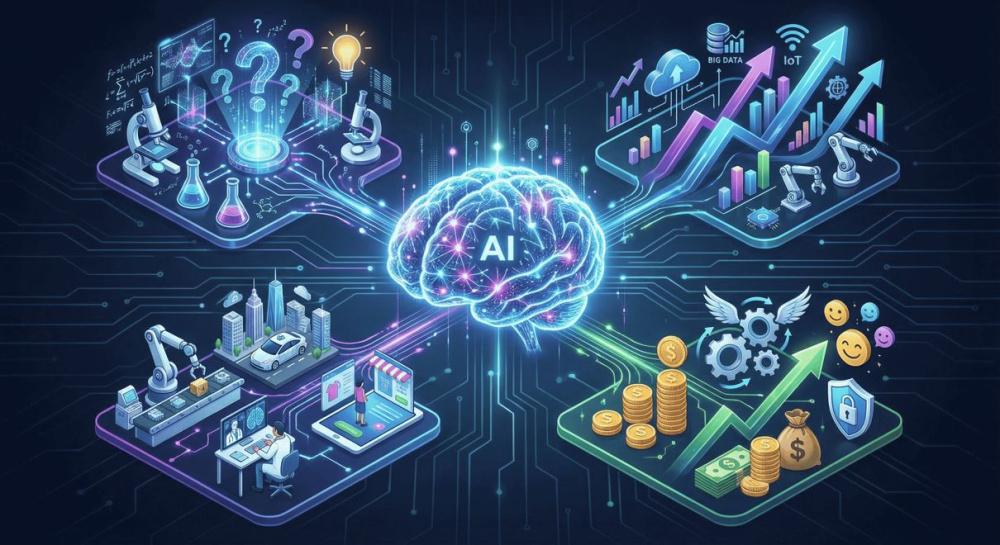
On May 15, an informal summit of the Organization of Turkic States was held in the city of Turkestan under the theme “Artificial Intelligence and Digital Development”. During the event, the President of the Republic of Uzbekistan Shavkat Mirziyoyev delivered a speech emphasizing the necessity of institutionalizing and systematizing cooperation among the member states of the Organization.
In his address, the Head of State put forward several initiatives to develop cooperation in the field of digital development. Among them is the formation of a strategic cooperation network in the field of artificial intelligence within the framework of the Organization. Such an effective institutional mechanism creates favorable conditions for identifying emerging drivers of economic growth, accelerating the development of cloud and quantum computing technologies, and establishing an integrated, open, and technologically advanced digital ecosystem.
As President Shavkat Mirziyoyev noted, in recent years, Uzbekistan, together with foreign investors, has attracted 6 billion US dollars in investment for the creation of data centers. In this regard, the leader of Uzbekistan proposed the development of the “Digital Turkic Corridor” concept, which will connect regional data centers via high-speed communication channels. To further strengthen practical interaction, the holding of a Technological Forum in Tashkent with the participation of member states was initiated.
This initiative by the President of Uzbekistan is not only relevant and timely but also holds particular significance in the era of digital development and at a time when the world is experiencing a turning point. Today, the economic and transformational potential of artificial intelligence is no longer in doubt. According to PwC estimates, the large-scale implementation of AI could provide a boost to the global economy of up to $15.7 trillion by 2030. More than 80% of OECD countries have already adopted national strategies for the development of artificial intelligence.
In Uzbekistan, a comprehensive process of institutional transformation in the public administration system is currently underway under the growing influence of artificial intelligence technologies. This transformation is characterized by the gradual integration of AI-driven solutions into governance mechanisms, aimed at enhancing administrative efficiency, optimizing decision-making processes, and advancing the digital modernization of state institutions.
A key step was the approval of the Strategy for the Development of Artificial Intelligence Technologies until 2030.
The document establishes the development of AI as one of the priorities of state policy and provides for the creation of a national data processing infrastructure, the development of computing power, the launch of AI laboratories, and the training of specialized personnel.
In parallel, the process of digitalizing public services is accelerating in the country. The development of the my.gov.uz platform, the expansion of electronic document management systems, the digitalization of the tax and banking sectors, as well as the introduction of Big Data elements, form the basis for a transition to a more analytical model of public administration.
Why AI is not yet reaching strategic decisions
Today, interest in artificial intelligence as a tool capable of changing the logic of public administration is growing rapidly worldwide. This is not just about the automation of individual processes, but about a transition to a “data-driven governance” model, in which decisions are made based on the continuous analysis of large data sets and scenario forecasting.
However, the key question lies less in the technological readiness of AI than in the ability of state institutions themselves to adapt to the new management model. Specifically, in the public sector, AI is still primarily applied at the “lower levels” of management-in the automation of services, processing of citizen appeals, monitoring systems, and administrative control. This indeed increases the efficiency of bureaucratic procedures but has little impact on the state's strategic thinking.
The use of AI in long-term forecasting, resource allocation, and strategic planning remains fragmented. A paradoxical situation has emerged: the state is prepared to entrust algorithms with issuing certificates, yet remains reluctant to employ them in the formulation of economic, social, or regional policy.
The issue no longer lies in the absence of technology. Modern artificial intelligence systems are capable of processing vast volumes of information, identifying hidden patterns, and modeling complex scenarios. The principal limitations, however, remain institutional in nature.
Firstly, there is a lingering distrust of algorithmic solutions. For many managers, AI remains a “black box”, the conclusions of which are difficult to interpret and, consequently, difficult to take political responsibility for.
Secondly, data fragmentation remains a critical limitation. Government agencies continue to function in isolated information circuits, which makes full-scale interdepartmental analysis impossible.
Thirdly, there is a lack of a clear understanding of the distribution of responsibility in the event of an algorithmic error. This creates caution and reinforces bureaucratic conservatism.
It is these factors that create a so-called “strategic vacuum”, in which traditional management methods are already losing their effectiveness, while new mechanisms have not yet become part of institutional practice.
International experience: technologies are secondary to institutions
International experience shows that states approach the integration of AI into their management systems differently, yet face similar limitations.
The European model emphasizes regulation, human rights protection, and algorithmic transparency. The American model develops primarily through market competition and the private sector. Singapore, by contrast, demonstrates the most comprehensive approach, where data integration and centralized management allow AI to be used as a full-fledged tool for strategic modeling within the “Smart Nation” concept.
Of particular interest is the experience of countries with transition economies, including Kazakhstan, where the digital modernization of the state is accompanied by attempts to introduce analytical platforms and data integration systems. However, even in these cases, the key limitation remains not the level of technology, but the readiness of state institutions to make decisions based on algorithmic analytics.
A comparison of international cases allows for an important conclusion: the effectiveness of AI implementation is determined primarily by the depth of institutional changes.
Uzbekistan’s experience also demonstrates the typical limitations of developing states. Despite the high pace of digitalization, interdepartmental data exchange remains fragmented. Many state bodies continue to function in the logic of closed information systems, which limits the possibilities for comprehensive analysis and strategic forecasting.
An additional challenge is the shortage of specialists capable of working at the intersection of public administration, data analytics, and artificial intelligence technologies. Today, the problem lies not so much in the lack of digital solutions as in the lack of management competencies to integrate AI into the decision-making process.
No less important is the issue of algorithmic transparency. Without clear mechanisms for the explainability of forecasts and independent auditing of AI systems, the level of trust in them within the state apparatus will remain limited.
AI as a “cognitive partner” of the state
In these conditions, artificial intelligence should be viewed not as a tool for mechanical automation, but as a “cognitive partner” of the state, expanding the analytical capabilities of the management system.
This involves the formation of a unified data space in which information from various ministries and agencies is integrated into a common analytical architecture. Such an approach allows for the identification of interdisciplinary relationships and the formation of more accurate predictive models.
A transition from rigid planning to scenario modeling becomes fundamentally important. Instead of a single “baseline” forecast, the state gains the ability to simultaneously analyze several options for the development of events-from optimistic to crisis-driven.
At the same time, the key condition remains the preservation of the “human-in-the-loop” principle. Artificial intelligence should act as an analytical co-pilot, not as a replacement for a political decision. However, a leader’s choice in such a system becomes more transparent and accountable, as it becomes possible to compare managerial decisions with algorithmic recommendations.
In fact, this is a transition from a model of static strategies to a system of continuous adaptation, where state planning turns into a dynamic process of working with data, risks, and scenarios.
A new agenda for states
Today it is becoming obvious that any attempts to implement artificial intelligence without the integration of interdepartmental data will remain fragmented. Without algorithmic transparency, it is impossible to build trust in their conclusions. Without a clear distribution of responsibility, management systems will avoid using AI in strategically sensitive areas.
For Uzbekistan, the question of integrating artificial intelligence into the public administration system is gradually moving beyond the scope of technological modernization. It is about the formation of a new model of a strategic state capable of working with forecasts, data, and scenarios in real-time. The effectiveness of this transformation will depend not so much on the speed of implementing digital platforms, but on the state’s ability to overcome institutional inertia, ensure interdepartmental data integration, and form a new management culture of decision-making.
Farkhad Buranov,
Deputy Director of the Center for Analysis
of Democratic Processes,
PhD in Law, Associate Professor