

Samarkand has turned into a dialogue platform uniting Central Asian civil society institutions
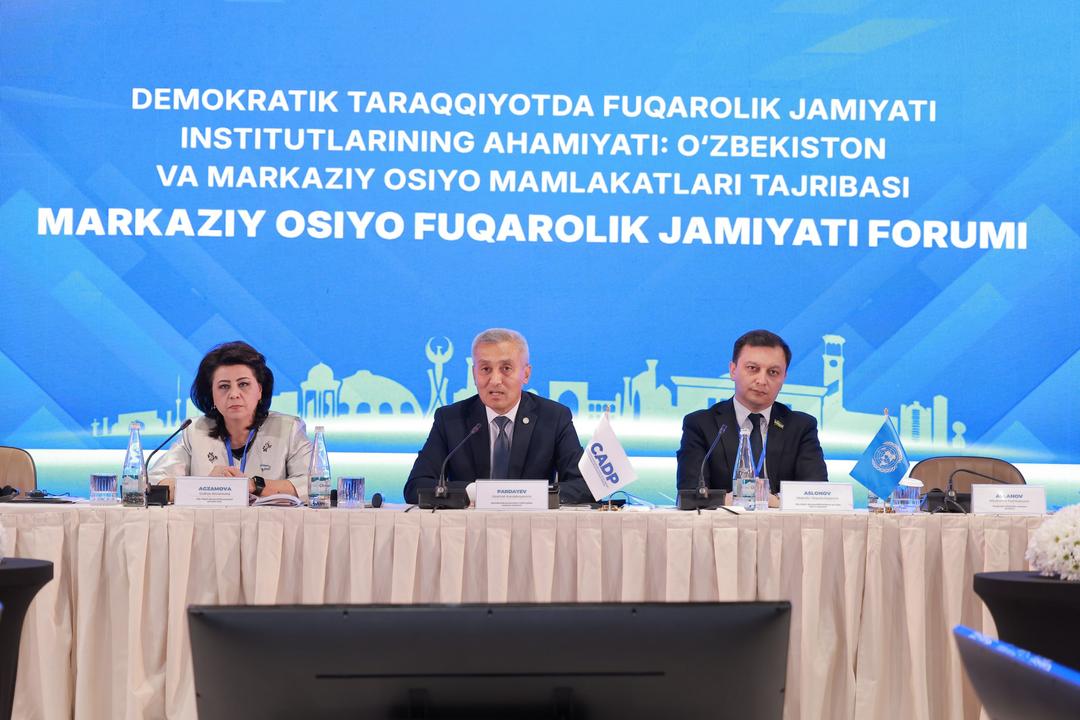
September 15 — On the occasion of the International Day of Democracy, the Central Asian Civil Society Forum, held under the theme
“The Significance of Civil Society Institutions in Democratic Development: The Experience of Uzbekistan and Central Asian Countries,” took place in the city of Samarkand on September 17, 2026.
The event was organized on the initiative of the Center for Analysis of Democratic Processes, in cooperation with the United Nations and the UNDP Country Office in Uzbekistan, the OSCE Project Coordinator in Uzbekistan, as well as the Public Fund under the Oliy Majlis, the Yuksalish Movement, Center for Progressive Reforms, Development Strategy Center, the National Association of Non-Governmental Non-Commercial Organizations of Uzbekistan (NANNOUz), and the Association of Women and Girls of Uzbekistan.
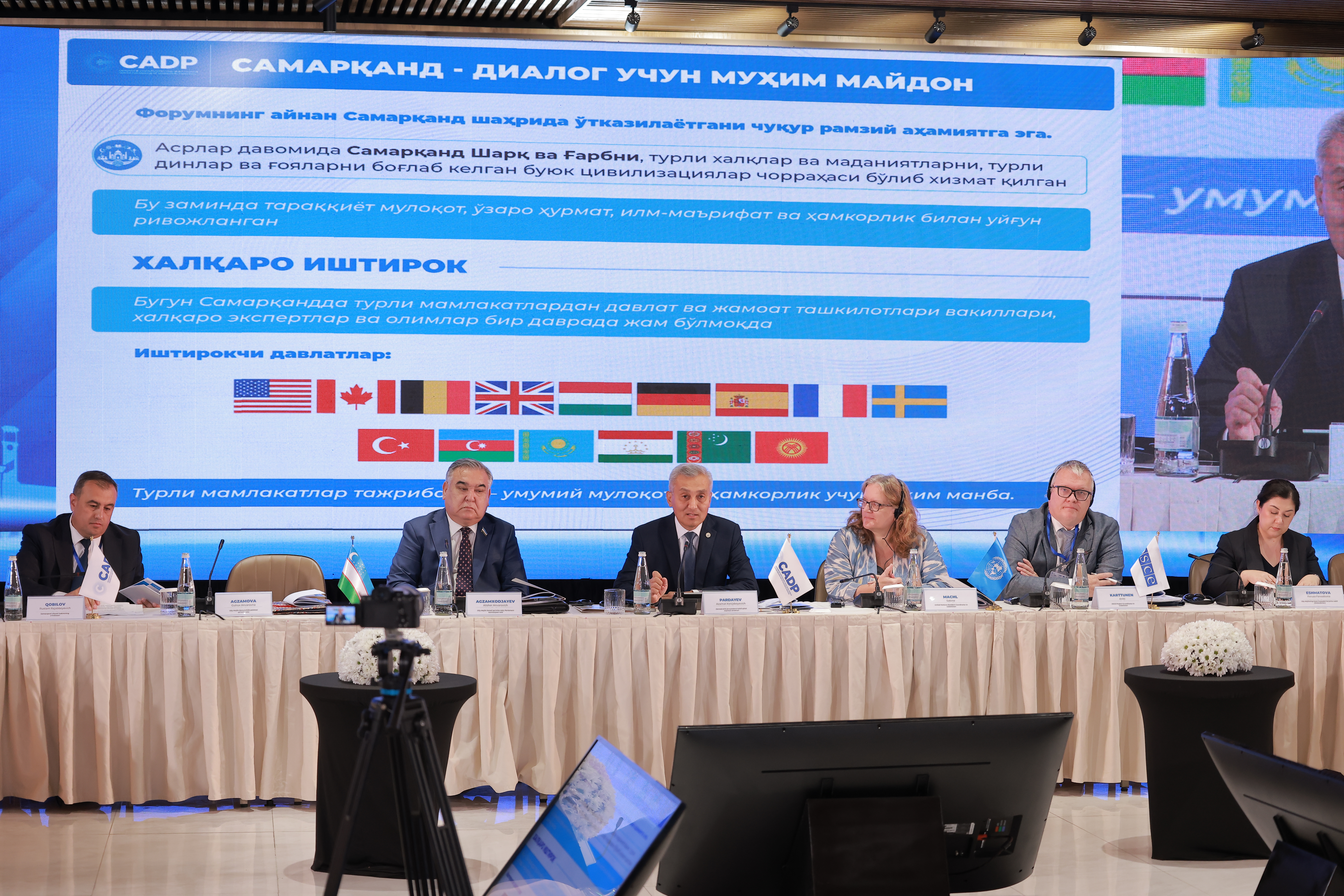
The forum brought together nearly 200 specialists, including international experts from think tanks in the United States, Canada, Belgium, the United Kingdom, Hungary, Germany, Spain, France, Sweden, Turkey, Azerbaijan, India, Tajikistan, Turkmenistan, Kyrgyzstan and Kazakhstan, as well as representatives of public organizations, research institutions, government bodies and the media from our country.
It should be noted that every year, within the framework of the International Day of Democracy, special attention is devoted to current trends and pressing issues in the development of democracy. In 2026, this day is being observed under the theme “Bring human rights into focus”.
The choice of Samarkand as the forum's venue also carries symbolic significance. For centuries, Samarkand has been a crossroads of civilizations linking East and West, and different people, cultures, religions and ideas — a land where progress has developed in harmony with dialogue, mutual respect, knowledge and cooperation.
According to international experts, the geopolitical and economic changes currently observed around the world, together with issues related to food and energy security, climate change, migration processes, and ensuring reliable information within the information space, are calling for further improvement of dialogue and cooperation mechanisms between the state and society.
Under these conditions, ensuring democratic development, strengthening social stability and cohesion, enhancing openness and accountability, and expanding public participation in decision-making processes are becoming increasingly important.
In these processes, civil society institutions play an important role in ensuring public oversight, advancing people's interests, and conveying public opinion to government bodies.
In this sense, modern democratic development is inherently linked to the open and accountable work of public administration bodies, as well as to the initiative and active participation of civil society institutions.
In recent years, Central Asian countries have built up a certain amount of experience in modernizing public administration, strengthening dialogue with the public, supporting civil society institutions, ensuring people's interests, and expanding the participation of women and youth in socio-political life.
Within the framework of the forum, the significance of the initiatives put forward by the President of the Republic of Uzbekistan, Shavkat Mirziyoyev, to strengthen the atmosphere of peace, stability, good-neighbourliness, and mutually beneficial cooperation in Central Asia was particularly highlighted.
In particular, the meeting noted developing regional cooperation in “green” energy, the rational use of transboundary water resources, and stepping up joint efforts to address the environmental problems of the Aral Sea region and the consequences of climate change as important priority areas of Uzbekistan's regional policy.
At the same time, each country's implementation of these areas has its own historical, national, and institutional features. This creates an important basis for the mutual exchange of experience, the discussion of common approaches, and the wide application of best practices across the region.
In this regard, a comparative study of the experience of Uzbekistan and the Central Asian countries, identifying common trends in democratic development, analyzing existing issues, and defining future tasks was one of the key areas of discussion at the forum.
Following the opening ceremony, the forum continued its work in three parallel sessions devoted to the themes “People-Oriented Governance and Social Partnership: Modern Mechanisms for Implementing Reforms”, “The Role of Civil Society Institutions in Ensuring People's Interests and Well-Being”, and “New Uzbekistan as a Driver of Common Development and Good Neighbourliness in Central Asia”.
During the sessions, participants paid particular attention to expanding cooperation between civil society institutions in Uzbekistan and the Central Asian states, implementing joint projects, and building networks of experts and NGOs.
A number of proposals and initiatives were also put forward on developing permanent dialogue platforms for civil society institutions in the region and on popularizing social innovations and effective NGO practices.
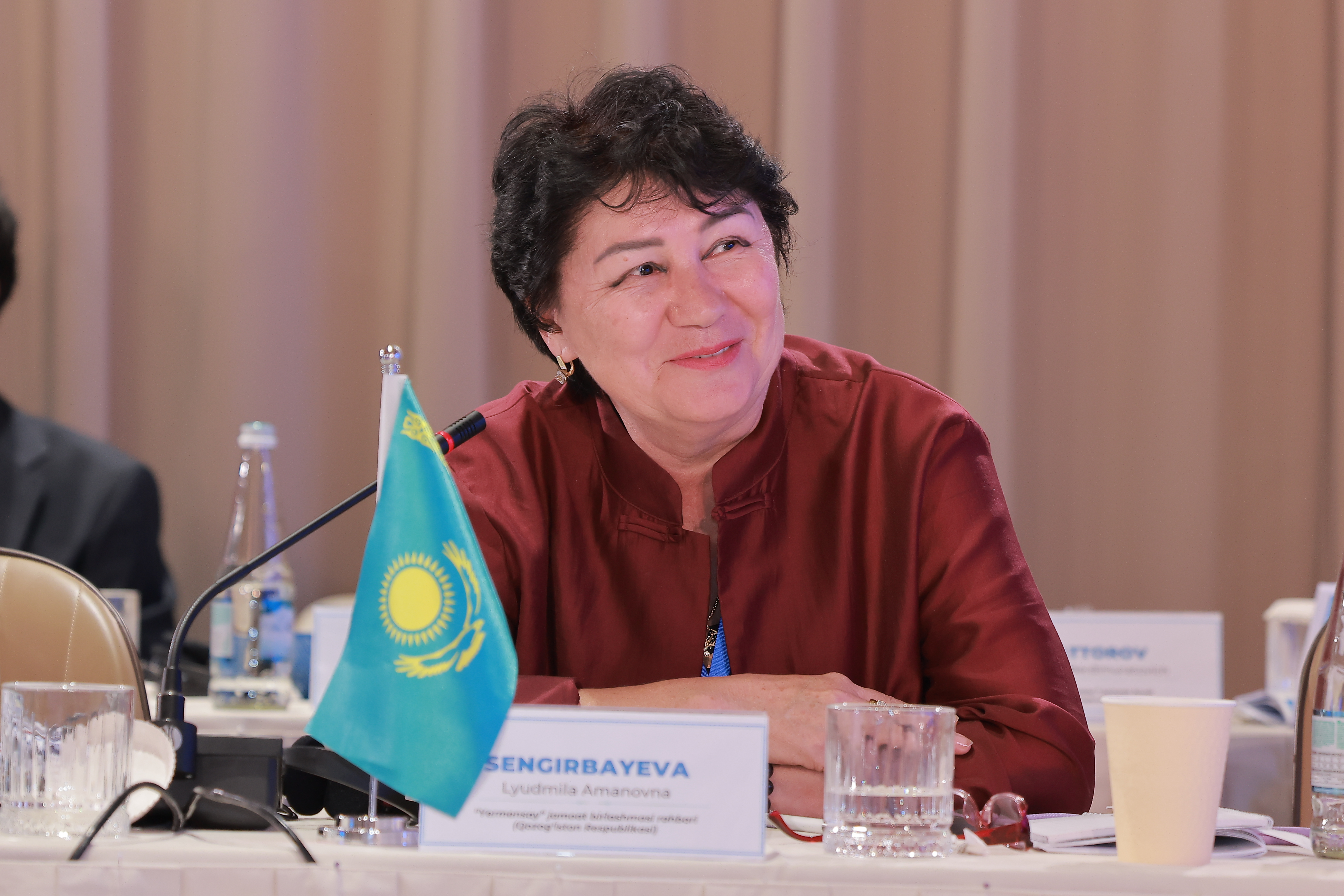
In particular, Lyudmila Sengirbayeva, Head of the “Ermensai” public association (Kazakhstan) shared that a three-tier model of "state — civil society — local self-governance" has taken shape in her country for resolving local social problems.
She noted that the underlying approach is aimed at shifting from traditional administrative governance toward participatory governance that engages citizens and NGOs in the decision-making process. According to her, this cooperation is carried out through the Civic Forum, public councils attached to ministries and local administrations (hokimiyats), and the institution of public oversight. The fact that public representatives make up at least 70 per cent of the membership of these public councils helps ensure that citizens' voices are reflected in decisions.
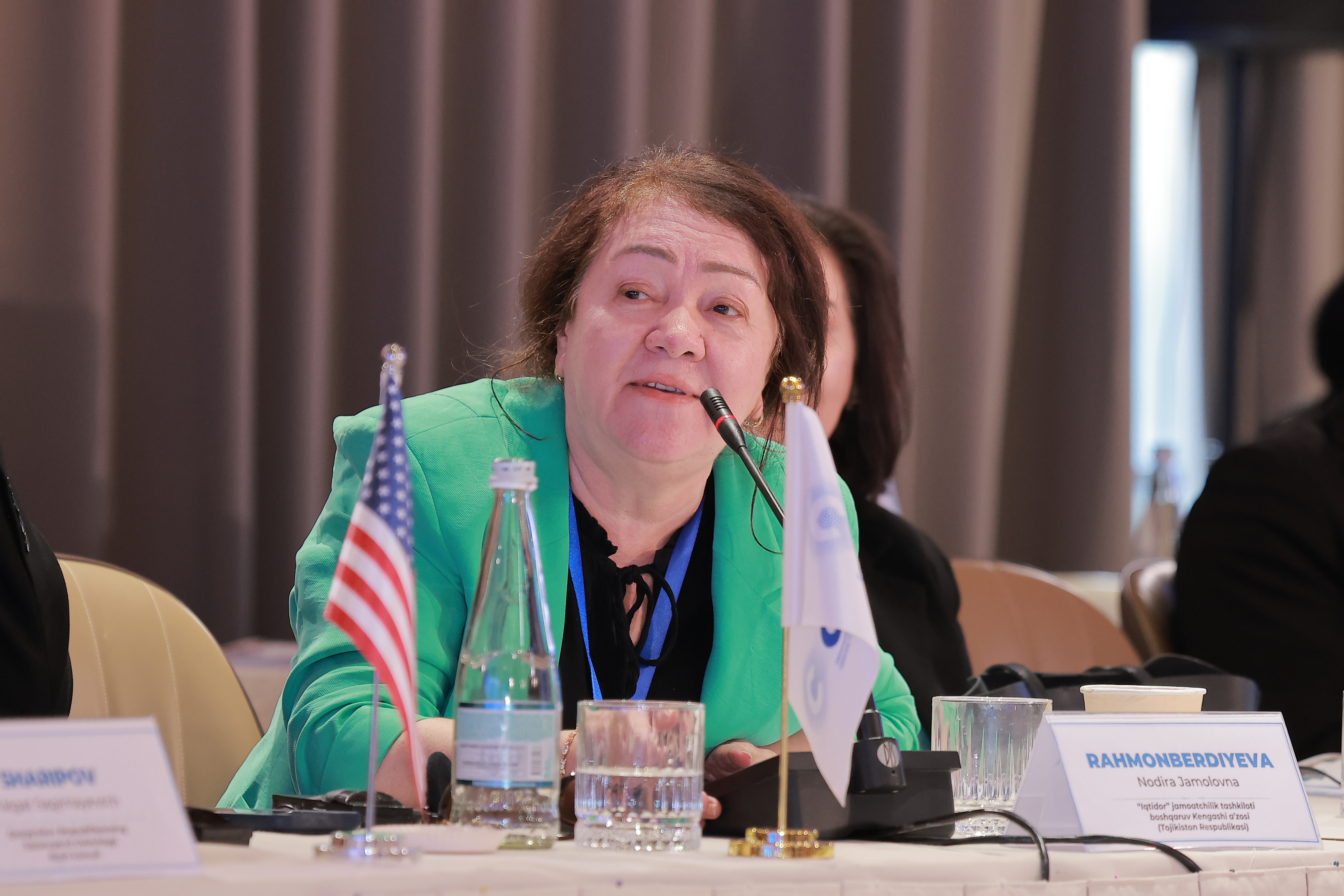
Nodira Rahmonberdiyeva, a Member of the Governing Council of the “Iqtidor” public organization (Tajikistan), described public monitoring as an effective feedback mechanism between the state and the population. In particular, she put forward the view that, as an effective feedback mechanism between the state and the population, public monitoring should cover the whole process — from identifying a problem, through collecting data, verifying facts, analysis and making recommendations, to engaging in dialogue with the state and following up on the implementation of those recommendations.
It is worth noting that the foreign experts who took part in the event specifically highlighted the reforms being carried out in our country to support civil society institutions, improve dialogue mechanisms between the state and society, and expand public participation.
At a time when new challenges are emerging for democratic institutions globally, the Forum once again showed that reforms aimed at developing civil society and strengthening open dialogue between the state and society in New Uzbekistan are continuing consistently.
Based on the results of the Forum, the Resolution was adopted, aimed at supporting the activities of civil society institutions in Uzbekistan and the Central Asian countries, strengthening cooperation with government bodies, expanding the exchange of experience, and developing regional dialogue.